
Share Post
Table of Contents
- What Actually Drives Customer Lifetime Value
- Why Quarterly Scoring Misses the Moments That Matter Most
- The Three Levers That Increase CLV in Real Time
- What This Looks Like Across Industries
- The Architecture Behind Real-Time CLV Improvement
- Getting Started Without Rebuilding Everything
- How evamX Supports Real-Time CLV Improvement


Summarize with AI


Most strategies for increasing customer lifetime value are built around a quarterly rhythm. A team reviews churn scores, segments customers by predicted value, plans campaigns for the highest-risk or highest-opportunity groups, and executes over the following weeks. This process is well established and genuinely useful. It is also, on its own, no longer sufficient.
The reason is timing. Customer lifetime value is not determined by a single decision made once a quarter. It is the accumulated result of hundreds of small moments: a support interaction handled well or badly, a relevant offer that arrives at the right time or the wrong one, a warning sign of disengagement caught early or missed entirely. A quarterly review can identify the customers who need attention. It cannot act in the specific moment when that attention actually matters.
What Actually Drives Customer Lifetime Value
Before discussing how to increase CLV, it is worth being precise about what drives it, because the answer shapes what kind of intervention is worth investing in.
CLV is a function of three variables: how long a customer stays, how much they spend during that relationship, and how efficiently the organization serves them. Increasing CLV means improving one or more of these without degrading the others. Retention campaigns that reduce churn but require expensive manual intervention improve one variable while eroding another. Upsell campaigns that increase spend but damage trust reduce future retention. The interventions that genuinely increase CLV are the ones that improve relevance and timing without adding cost or friction, which is precisely what real-time detection and response make possible at scale.
Why Quarterly Scoring Misses the Moments That Matter Most
A churn model that runs weekly or monthly identifies customers whose aggregate behavior over the prior period suggests elevated risk. This is valuable information. It is also, by construction, retrospective. It tells an organization who was at risk last week, not who is at risk right now, and the gap between those two things is where a meaningful share of preventable churn actually happens.
Consider a banking customer whose engagement has been declining gradually over several weeks, a pattern a monthly model would eventually flag. Now consider the same customer calling the contact center twice in one day with an unresolved issue, then not logging into the mobile app for the following five days. This is a much stronger, much more immediate signal than the gradual decline the model was already tracking, and it appears in the interval between scoring runs. A real-time system that monitors behavioral and transactional signals continuously can detect this combination the moment it occurs and trigger an intervention while the relationship is still recoverable. A system that only evaluates risk on a schedule discovers it after the customer has likely already decided to leave.
The same dynamic applies to upsell and cross-sell opportunities, which are frequently more time-sensitive than churn risk. A telecom subscriber who browses upgrade plans repeatedly within a single session is expressing an interest that is strongest in that moment and measurably weaker by the time a scheduled campaign would reach them days later. A retail customer who views the same product multiple times across a shopping session is in an active consideration phase that a weekly recommendation email arrives too late to capitalize on. In both cases, the value-increasing action was available, but only within a window that batch processes are structurally unable to reach.
The Three Levers That Increase CLV in Real Time
Organizations that successfully increase CLV using real-time intelligence are typically pulling on three specific levers, each addressing a different part of the customer lifecycle.
The first is early intervention on disengagement. Customers rarely churn suddenly. Engagement declines gradually, through reduced login frequency, fewer transactions, shorter sessions, more support contacts. Real-time monitoring evaluates these signals continuously rather than on a schedule, which means the moment a combination of signals crosses a meaningful threshold, an intervention can be triggered while the relationship still has momentum. Detecting this decline three weeks earlier than a monthly model would have is not a marginal improvement. It is frequently the difference between a save and a loss.
The second is capturing high-intent moments as they happen. Every customer relationship generates moments of elevated purchase or upgrade intent: a loan calculator used repeatedly, a product page revisited, a plan comparison tool opened multiple times. These moments are valuable specifically because they are temporary. A real-time system that recognizes the behavior and responds within the same session converts at meaningfully higher rates than the same offer delivered through a scheduled campaign, because the customer's attention and interest have not yet moved elsewhere.
The third is reducing the cost of serving each customer without reducing the quality of that service. A meaningful share of the cost that erodes CLV comes from friction: failed transactions that generate support calls, confusion that could have been resolved proactively, service issues that escalate because nobody intervened early. A real-time system that detects a failed payment, an unusual transaction pattern, or a service disruption and responds automatically, before the customer has to initiate contact, both improves the experience and reduces the operational cost of maintaining the relationship. Both effects increase CLV simultaneously.
What This Looks Like Across Industries
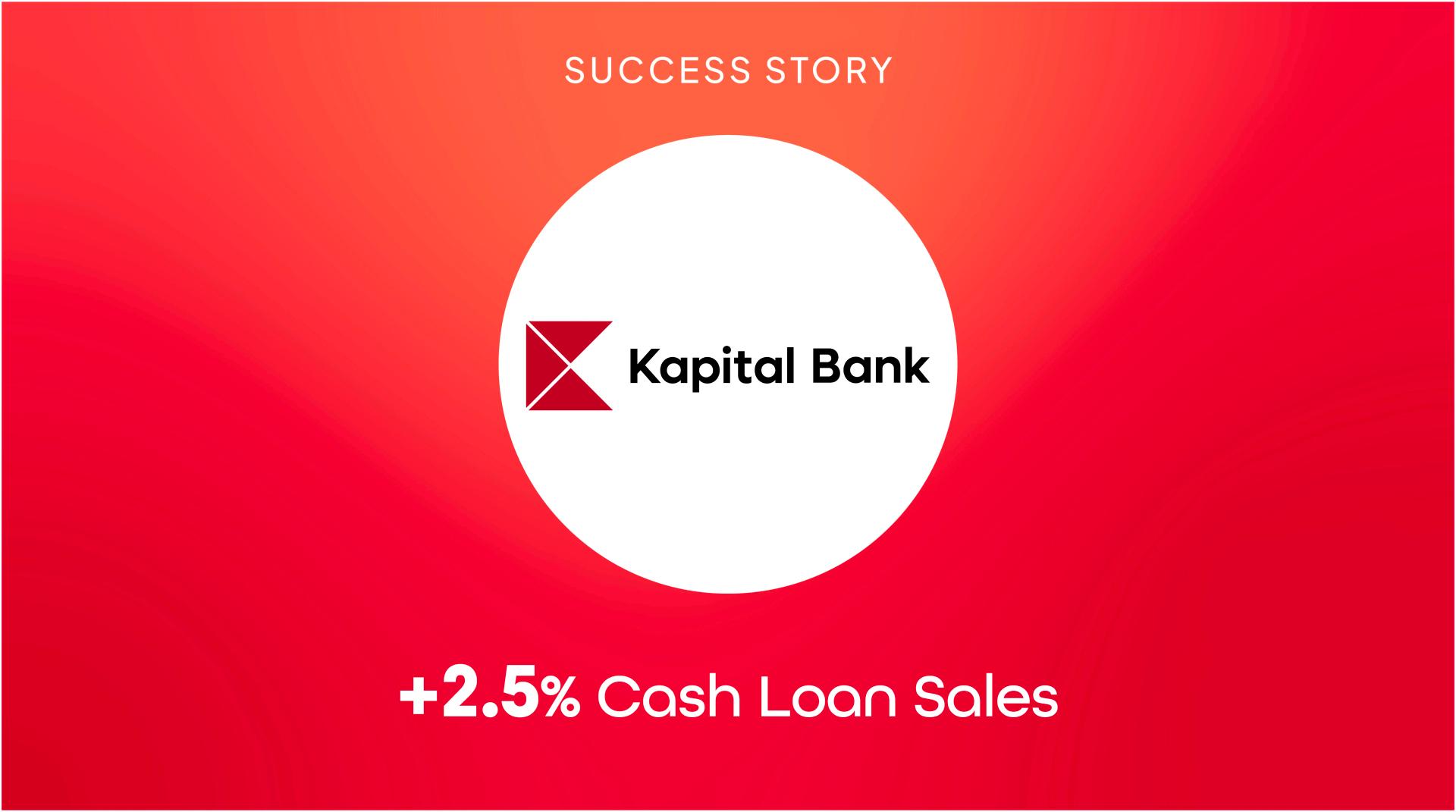
In banking, a customer whose spending pattern suddenly shifts, perhaps a large unexpected transfer or an unusual sequence of transactions, is signaling something the bank should respond to immediately, whether that signal indicates financial stress worth addressing with support or an opportunity worth addressing with a relevant product. A quarterly relationship review discovers this shift long after the moment when a timely response would have mattered most. Kapital Bank shows what closing that gap looks like at scale: running 96 active real-time scenarios against more than 2 million customer events daily, the bank grew incremental deposit sales by 16 percent, growth that depends on catching these shifts as they happen rather than in a scheduled review.
In telecommunications, a subscriber whose data usage has dropped sharply, who has stopped making calls on the network and is only connecting through wifi, is exhibiting one of the strongest available churn signals available to an operator. Detecting this pattern the week it emerges, rather than the month it shows up in an aggregate report, is frequently the entire difference between retaining and losing that subscriber. Our detailed look at telecom customer engagement covers several of these scenarios in more depth.
In retail, a customer's cumulative value is shaped disproportionately by their experience in the first few purchases. A delivery delay, a return handled poorly, or a lack of follow-up after a first purchase all reduce the odds of a second one. Real-time detection of these moments, and an immediate, appropriate response, protects a disproportionate share of long-term value relative to the cost of the intervention.
The Architecture Behind Real-Time CLV Improvement
Delivering on any of these three levers at meaningful scale requires more than a predictive model. It requires an architecture that can evaluate customer signals continuously, decide on the right response instantly, and execute that response across whatever channel the customer is using, all without the hours or days of lag that batch processing introduces.
This means an event streaming foundation that ingests behavioral and transactional data as it occurs rather than on a refresh schedule, a decisioning layer that evaluates each event against the customer's full context rather than a pre-computed segment, and an execution layer that can act across mobile, web, contact center, and other channels the moment a decision is made. Our broader breakdown of how these layers fit together is covered in our guide to building a connected marketing technology stack, which applies directly to CLV-focused use cases as well as broader engagement strategy.
Organizations that already have strong predictive models for CLV and churn risk do not need to discard that work to benefit from real-time intelligence. The most effective implementations combine both: predictive models that identify who is worth prioritizing, connected to a real-time layer that determines when and how to act on that priority as customer behavior actually unfolds.
Getting Started Without Rebuilding Everything
Organizations do not need to convert their entire customer engagement stack to real-time architecture in one step to start capturing CLV improvements. The highest-leverage starting point is usually the single moment in the customer lifecycle where delay is most costly, whether that is churn intervention, onboarding, or a specific high-intent behavior common to the business. Proving the value of real-time response in one well-chosen scenario builds the case, and often the technical foundation, for expanding it further.
The organizations seeing the largest CLV gains are not necessarily the ones with the most sophisticated predictive models. They are the ones that have closed the gap between detecting a customer signal and acting on it, so that the moments that actually determine whether a relationship grows or erodes are met with a response while they still matter.
How evamX Supports Real-Time CLV Improvement
evamX is built to close the gap between signal detection and action across the customer lifecycle. Its event streaming foundation captures behavioral, transactional, and service signals from mobile apps, core systems, and every connected touchpoint as they occur, and the NBX decisioning engine evaluates each signal against the customer's full live context to determine the right response in milliseconds.
This means churn risk is detected as engagement actually declines rather than at the next scoring cycle, high-intent moments are captured within the same session rather than in a delayed campaign, and service issues are resolved proactively rather than after the customer has to reach out. Evo AI continuously monitors which interventions are working and surfaces where adjustments will improve outcomes, closing the loop between action and result without waiting for the next quarterly review.
For banks, telecom operators, and retailers where the cost of a missed moment compounds across millions of customer relationships, this architecture turns CLV improvement from a periodic exercise into a continuous, automated discipline.