
 Evo AI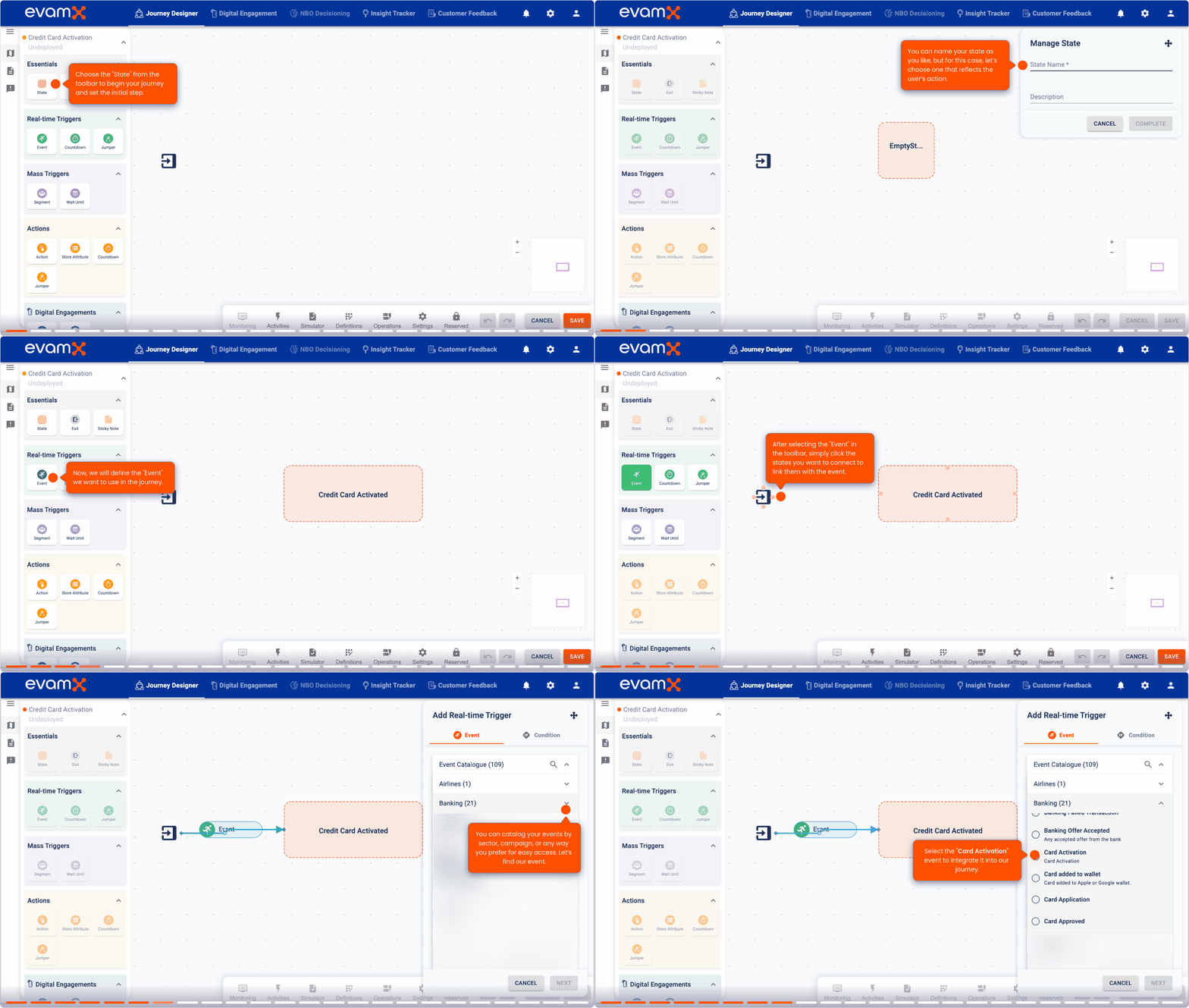


Table of Content
- What Data-Driven Personalization Actually Means
- Why Real-Time Decisioning Is the Missing Layer
- The Architecture Behind Personalization That Actually Works
- Data-Driven Personalization Across Industries
- Why Unified Customer Experiences Are So Hard to Scale
- What Good Data-Driven Personalization Looks Like
- How evamX Powers Data-Driven Personalization
- The Question Worth Asking
Most brands have already solved the data problem. Customer data platforms, data lakes, analytics dashboards, behavioral tracking, all of it is common infrastructure now, across nearly every industry. And yet unified, relevant customer experiences remain rare.
The problem was never a lack of data. The problem is timing. Customer intent changes in seconds. A dashboard that shows what a customer did yesterday cannot act on what that customer needs right now. And personalization that arrives after the moment has passed is not personalization. It is a delayed response dressed up as one.
What Data-Driven Personalization Actually Means
Data-driven personalization is the practice of using customer data, behavior, preferences, transaction history, contextual signals, to tailor experiences, messages, and offers to each individual, rather than to the segment they were assigned to last quarter.
Most enterprises already have the raw material for this. Customer data platforms, analytics tools, and reporting dashboards are standard across banking, telecom, and retail. What they produce is insight, not action. Dashboards show what happened. Reports explain why. Neither one decides what should happen next, and neither one executes anything.
That gap, between having the data and acting on it while it still matters, is the actual battleground. A fragmented decisioning process, where marketing, CRM, and digital teams each make isolated calls based on partial context, produces exactly the outcome customers notice: disconnected messages, repeated offers, and experiences that feel stitched together instead of unified.
A unified customer experience requires unified decisioning. Unified data alone does not get you there.
Why Real-Time Decisioning Is the Missing Layer
Real-time decisioning is what closes the gap between insight and action. Instead of waiting for data to be processed, reviewed, and scheduled into next month's campaign, a real-time system evaluates each signal as it happens and determines the most relevant response instantly.
The loop is simple to describe and hard to build: signal, context, decision, action, feedback. Every customer interaction generates a signal. That signal gets evaluated against the customer's live context, their history, eligibility, and the business rules that apply to them. A decision gets made immediately, an action executes on the right channel, and the outcome feeds back into the system to sharpen the next decision.
The value of a customer signal decays fast, often within minutes. A pricing page visit, a declined transaction, a support call about billing, each one is only actionable while it is still fresh. Real-time decisioning is what makes the difference between using that value and losing it to a batch cycle.
The Architecture Behind Personalization That Actually Works
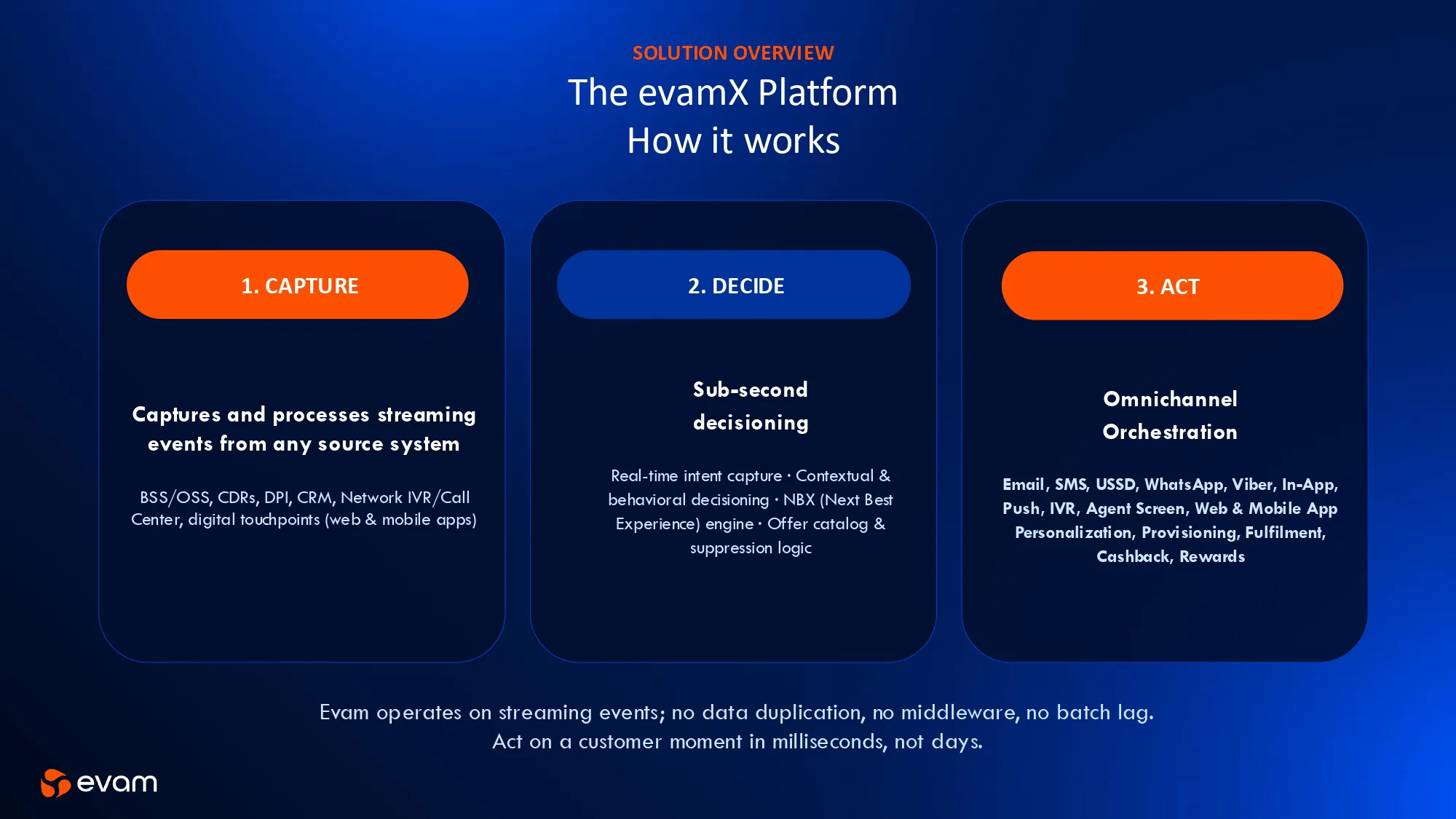
Personalization sounds simple in principle: notice a signal, respond to it. In practice, three architectural decisions separate personalization that actually converts from personalization that just feels marginally more relevant.
1. Real-Time Capture vs. Batch Processing
The most common failure mode is latency dressed up as real time. A system that captures events continuously but processes them in hourly or daily batches is not doing real-time personalization. It is doing delayed personalization, which beats no personalization, but falls well short of the actual opportunity.
A customer whose behavior is evaluated and acted on within the same session is in a fundamentally different position than one whose behavior gets reviewed six hours later, after their intent has already moved on to something else.
2. Contextual Decisioning, Not Static Rules
A rule that says "if customer visits pricing page, send discount" treats every visitor identically, and they are not identical. A customer visiting a pricing page for the first time is in a different state than one who has visited it three times this week after a support interaction. The first may just be browsing. The second is actively deciding.
Real contextual decisioning evaluates the signal against everything known about that specific customer, behavioral history, lifecycle stage, channel preference, and eligibility, and selects the action most likely to be relevant for them, not for the aggregate group who shares one behavior.
3. Omnichannel Execution From a Single Layer
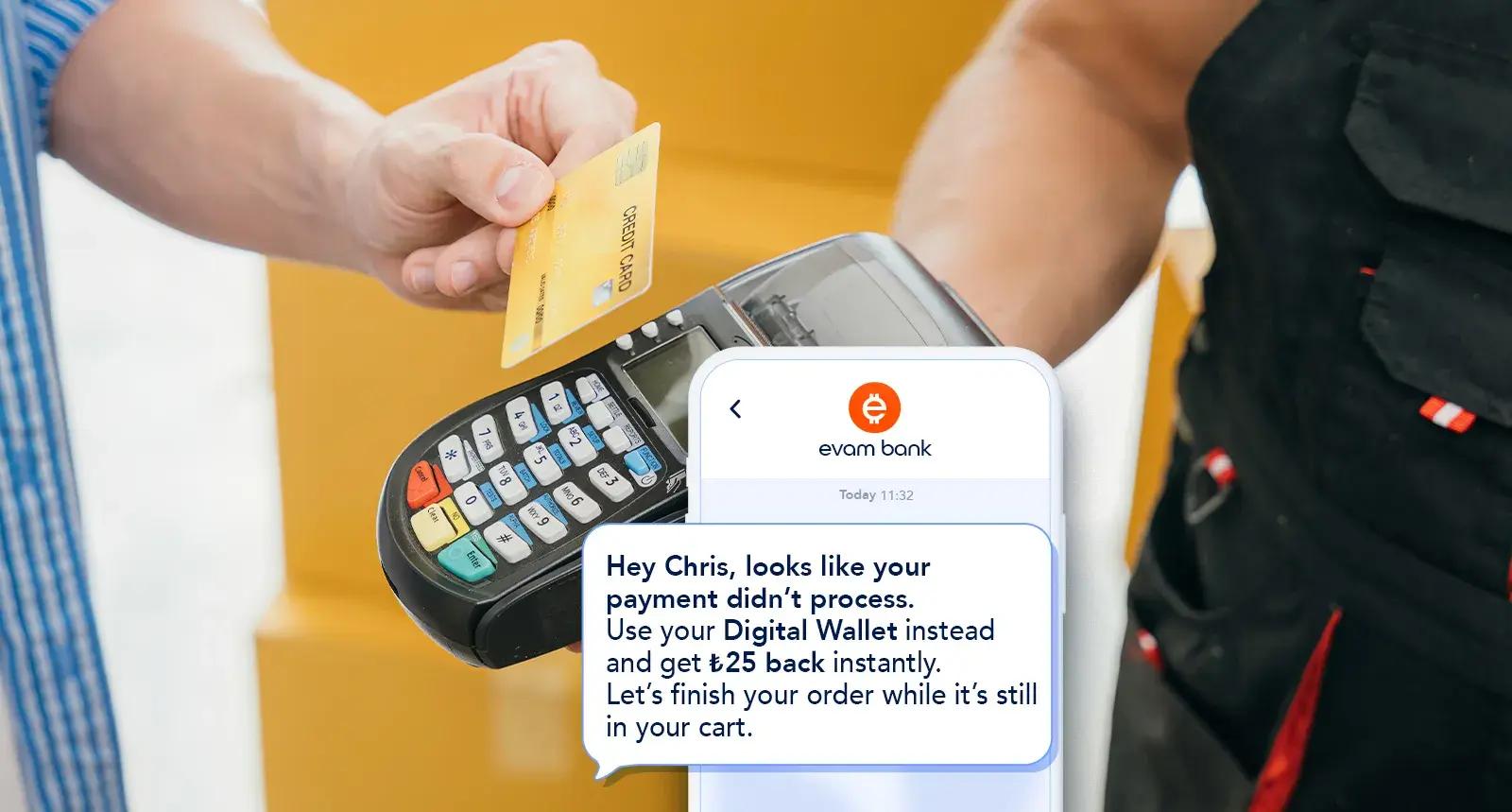
Personalization that fires on one channel while ignoring the rest creates the exact inconsistency that erodes customer trust. A customer gets a push notification about an abandoned cart, then opens their email and finds no reference to it. They contact support, and the agent has no visibility into either.
Effective personalization orchestrates the response across every relevant channel from one decisioning layer, so the push notification, the email, the in-app message, and the agent's screen all reflect the same decision and the same context. If the customer converts on one channel, every other pending action for that journey resolves immediately.
Data-Driven Personalization Across Industries
The mechanics stay consistent. What changes across industries is which signals carry the most intent.
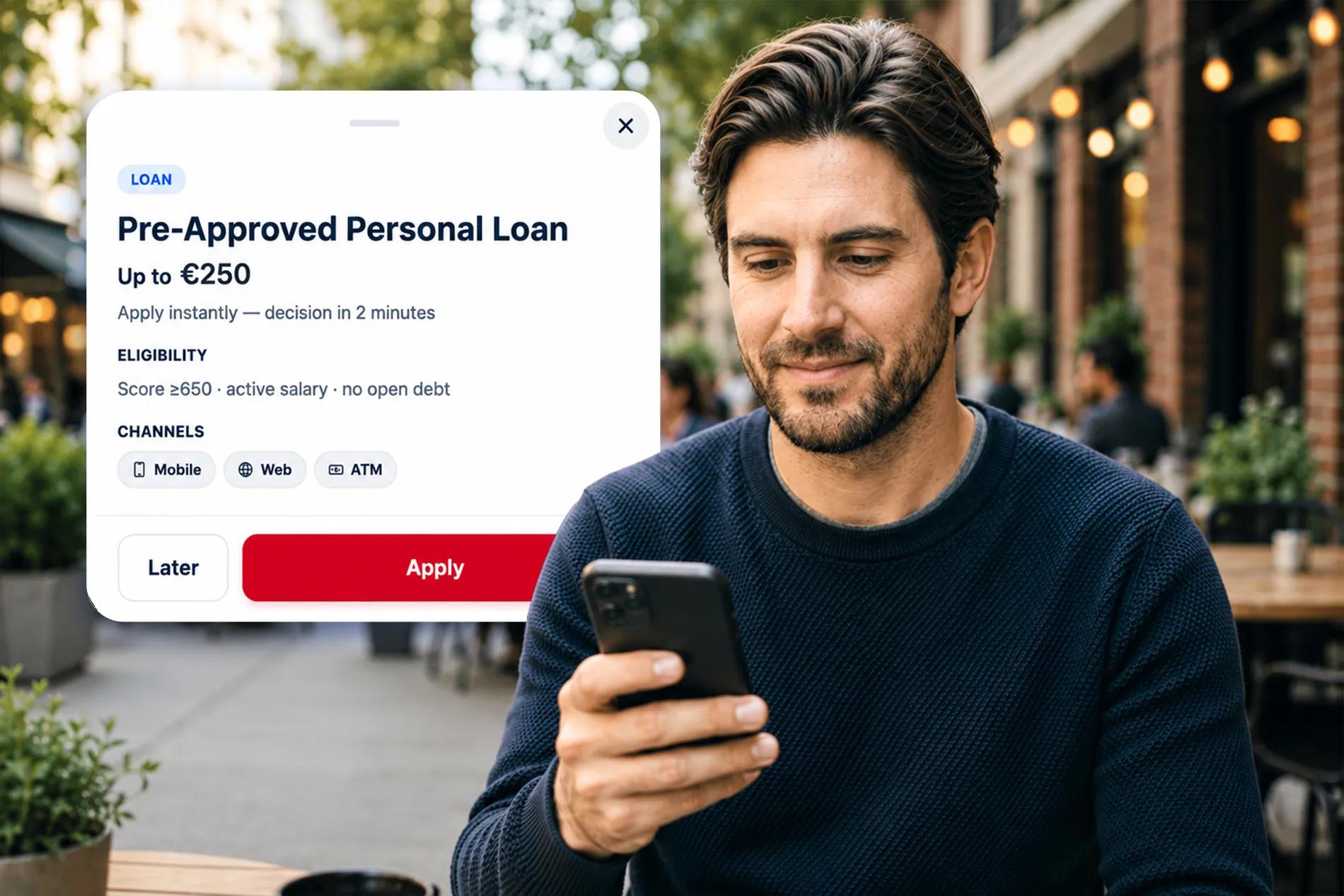
In banking, a transaction, a balance change, or a loan calculator visit can shift customer intent within minutes. A customer who declines an offer at the ATM and logs into the mobile app minutes later needs that decline remembered, not repeated. Offers, alerts, and guidance have to adapt immediately to stay relevant and compliant.
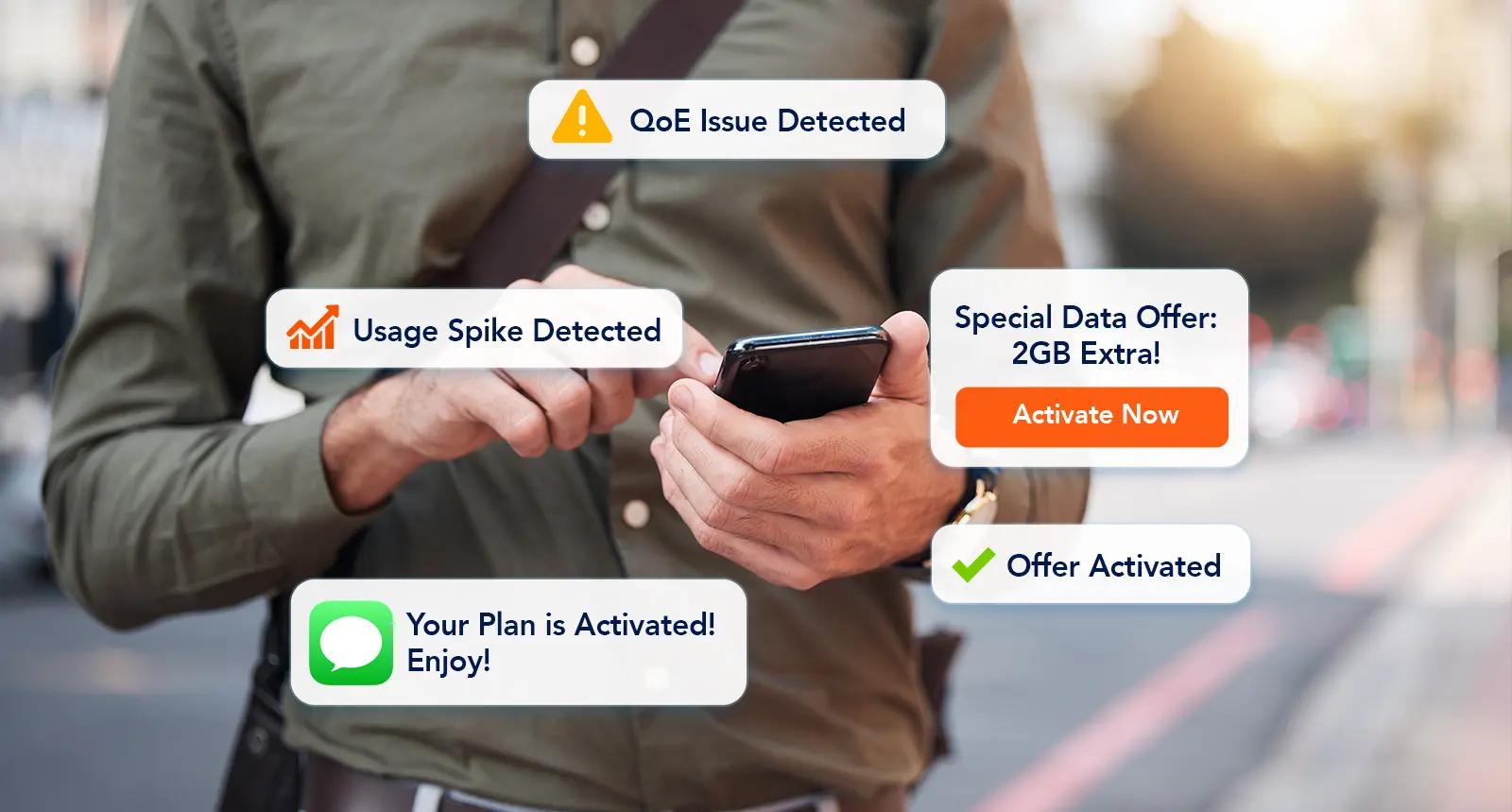
In telecommunications, usage-based signals carry the strongest intent. A data balance check that reveals low remaining allowance, a streaming session that keeps running past the point where data is depleted, a competitor app opened for the first time, each is a spend-triggered or behavioral signal with a short window of relevance. A single wallet transaction, a fuel purchase, an airport payment, a streaming subscription charge, can trigger a specific, contextually relevant offer the moment it happens rather than in next week's campaign.
In retail and e-commerce, browsing and cart behavior reflect intent that exists only in the moment it happens. A product viewed three times without a purchase, a cart abandoned with items still inside, a loyalty balance close to a reward threshold, all of these are decision states. Personalization that reaches the customer within minutes catches them still in that state. Personalization that reaches them the next morning usually catches someone who has already moved on.
Across all three, the difference between a generic experience and one that actually converts is speed of decisioning, not creativity of the offer.
Why Unified Customer Experiences Are So Hard to Scale
Most organizations design strong customer journeys on paper. The failure shows up during execution.
Common barriers include organizational silos between data, CRM, marketing, and digital teams, tool sprawl that slows execution down, manual campaign logic that cannot adapt dynamically once it is live, and approval cycles long enough that the moment the campaign was built for has already passed by launch.
A unified customer experience, in practice, is one where a customer is recognized as the same person across every channel, and every decision draws on one shared, current understanding of their situation. Most organizations do not fail at strategy. They fail at execution speed, because even centralized data does not guarantee centralized decisioning.
What Good Data-Driven Personalization Looks Like
The strongest implementations share a few habits that go beyond the underlying architecture.
They define which signals actually matter. Not every customer action is worth building a trigger around. Effective personalization programs identify the handful of signals that carry real intent for their business and build around those, instead of trying to react to everything.
They match the response to the window the signal actually has. A cart abandonment nudge that fires 48 hours later is solving for the wrong metric. A low-balance offer that waits for a batch cycle misses the moment the signal was worth acting on.
They apply suppression rigorously. A customer who already converted should not keep receiving the same offer. A customer who declined something yesterday should not see it again today. Suppression is not a limitation on personalization. It is what keeps it from becoming noise.
They treat every trigger as the start of a journey, not a one-off message. The strongest personalization does not stop after the first response. A triggered interaction that gets a reaction feeds into what happens next, so the relationship deepens instead of resetting to zero after every message.
How evamX Powers Data-Driven Personalization
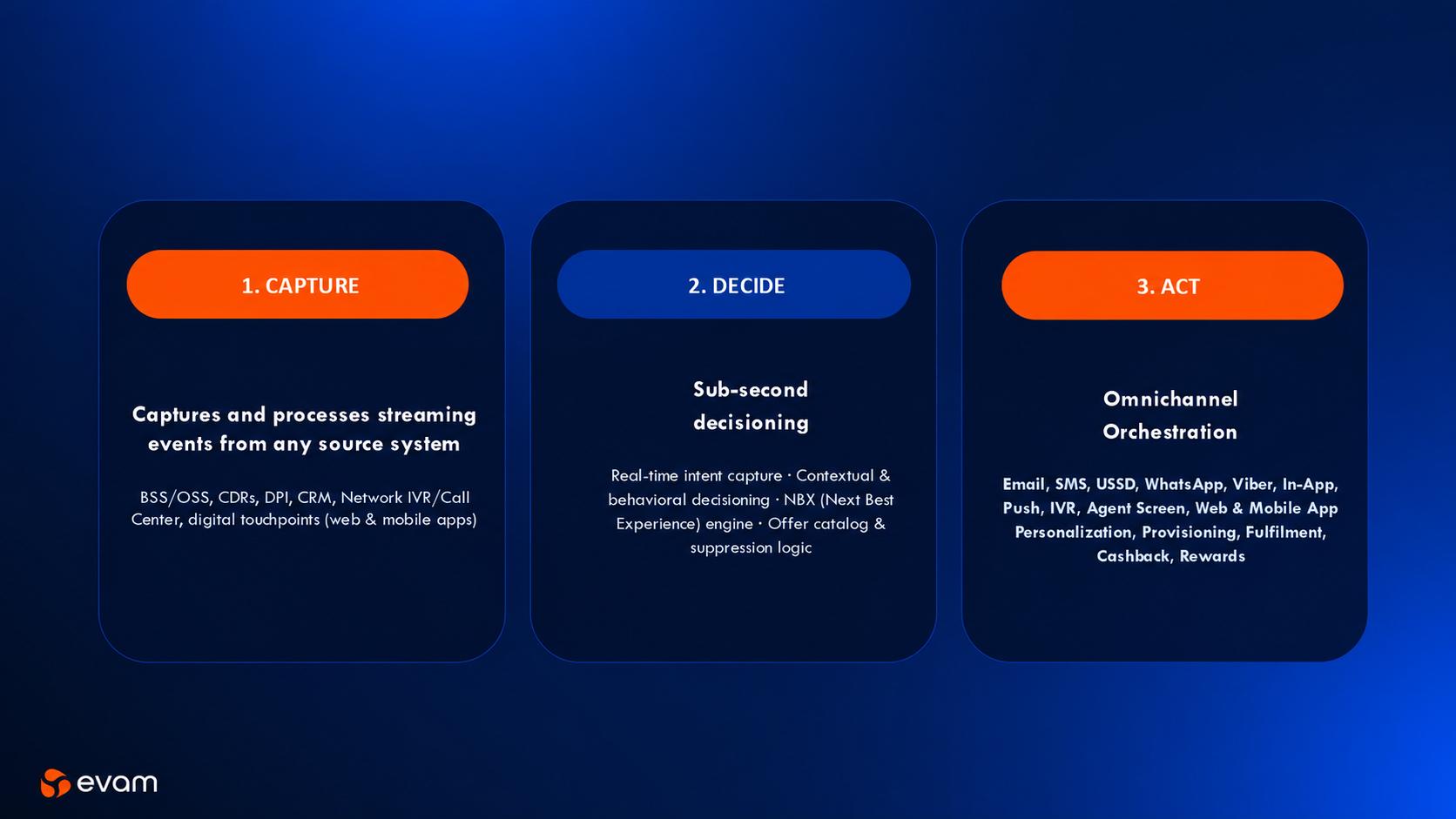
evamX is built for the real-time architecture that genuine data-driven personalization requires, capturing every customer event, a transaction, a page visit, a declined offer, a support interaction, as it happens, without batch lag and without duplicating data across systems.
The NBX decisioning engine evaluates each event against full customer context, behavioral history, lifecycle stage, eligibility, and business rules, and selects the most relevant action in milliseconds. That decision reaches the customer immediately through whichever channel they're actually in, push, in-app, SMS, email, web, IVR, or agent screen, from a single orchestration layer, so a decline on one channel is suppressed everywhere else instead of repeated.
For marketing and CVM teams, Journey Designer provides a no-code way to build and adjust personalization journeys without waiting on engineering capacity for every change, and Evo AI adds a layer that surfaces which triggers are converting and which are underperforming.
Across deployments running this architecture, the pattern holds at every stage of the customer lifecycle: onboarding journeys have seen daily app engagement rise by around 15 percent and onboarding completion improve by up to 30 percent, real-time offers triggered at the moment of a transaction have converted at up to 2 times the rate of the same offer delayed to a batch cycle, and cross-sell campaigns using real-time triggers have converted at 1.4 to 1.7 times their batch equivalents. On the retention side, organizations running real-time engagement have cut service costs by roughly half while shifting the majority of interactions to lower-cost digital channels, without the drop in satisfaction that usually comes with that kind of shift.
The Question Worth Asking
Every business already has customers sending the signals that would let them personalize well: a page visited twice, a cart left mid-checkout, a balance checked three times in a week. The data was never the missing piece.
The question is whether the decisioning layer underneath that data is fast enough to act while the signal still means something. That is the entire difference between personalization that feels generic and personalization that feels like the brand actually knows the customer.
If you want to see what this looks like against your own customer data, our team is glad to walk through it with you. Reach out through our contact page.